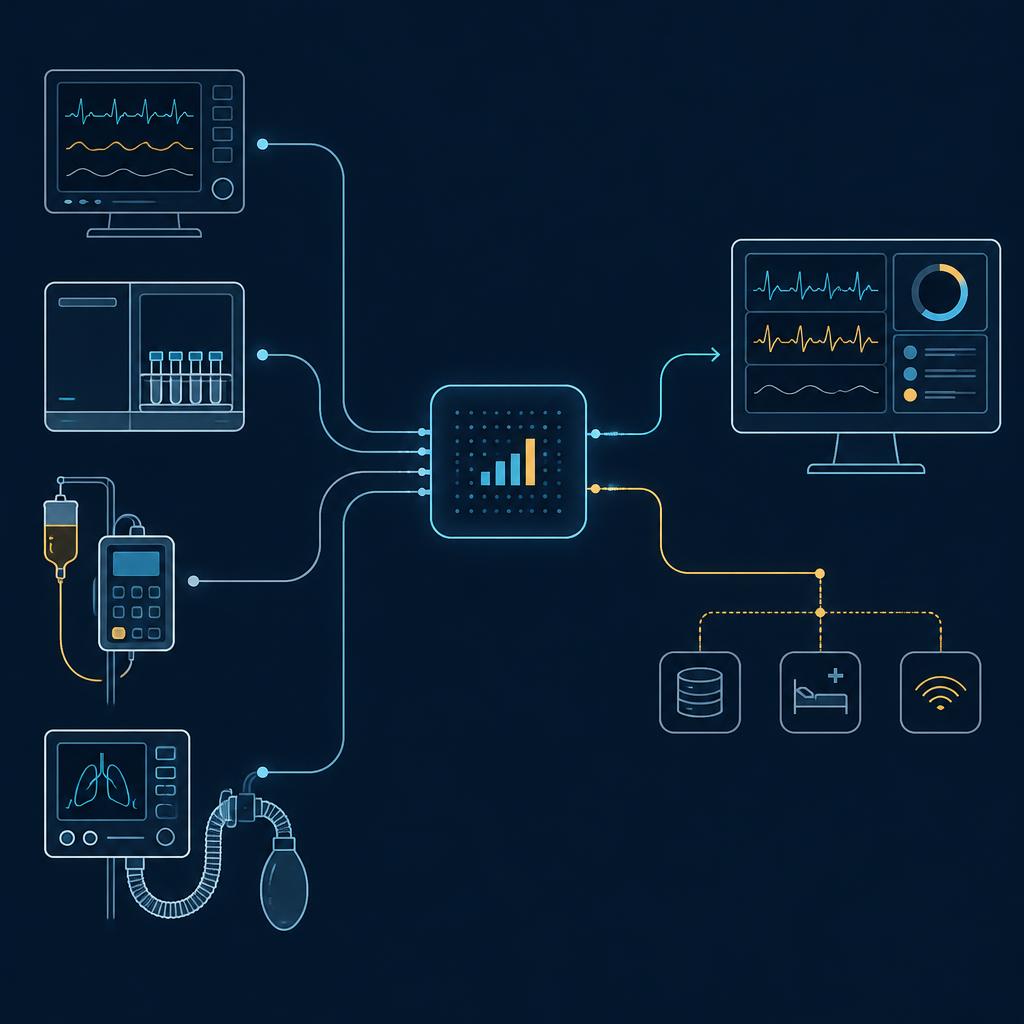
Asynchronous biological streams entering a central state processor and emerging as prioritized measurement, intervention and device-control outputs.

USPTO-Filed Biological Control Platform

Deadline-Aware Biological Control

Following the active biological driver of disease—not merely the initiating event.

Back to Intellectual Property

Rapidly evolving biological emergencies do not remain mechanistically static. An initiating toxin may begin the injury, but direct tissue destruction, vascular disruption, inflammatory amplification, neurologic dysfunction, renal stress and loss of compensatory reserve may subsequently follow different trajectories. Effective intervention therefore depends upon identifying what is driving deterioration now—not only what started it.

Filing details

USPTO filed title
SYSTEMS AND METHODS FOR DEADLINE-AWARE BIOLOGICAL CONTROL AND EMERGENCY MEDICAL DEVICE ORCHESTRATION
Provisional application
64/173,771
Filed
October 10, 2026

The Clinical Problem

Conventional emergency assessment often organizes information by source: vital signs, laboratory values, toxin identification, imaging, organ function and treatment history. Yet these observations may evolve asynchronously and may cease to reflect the same underlying driver.

Toxin burden may decline while endothelial leakage, myocyte injury, inflammatory signaling, neurologic dysfunction or renal deterioration continues. A treatment strategy anchored exclusively to the initiating exposure may therefore lag behind the biology presently controlling the patient’s trajectory.

A Multistream Mathematical Control Engine

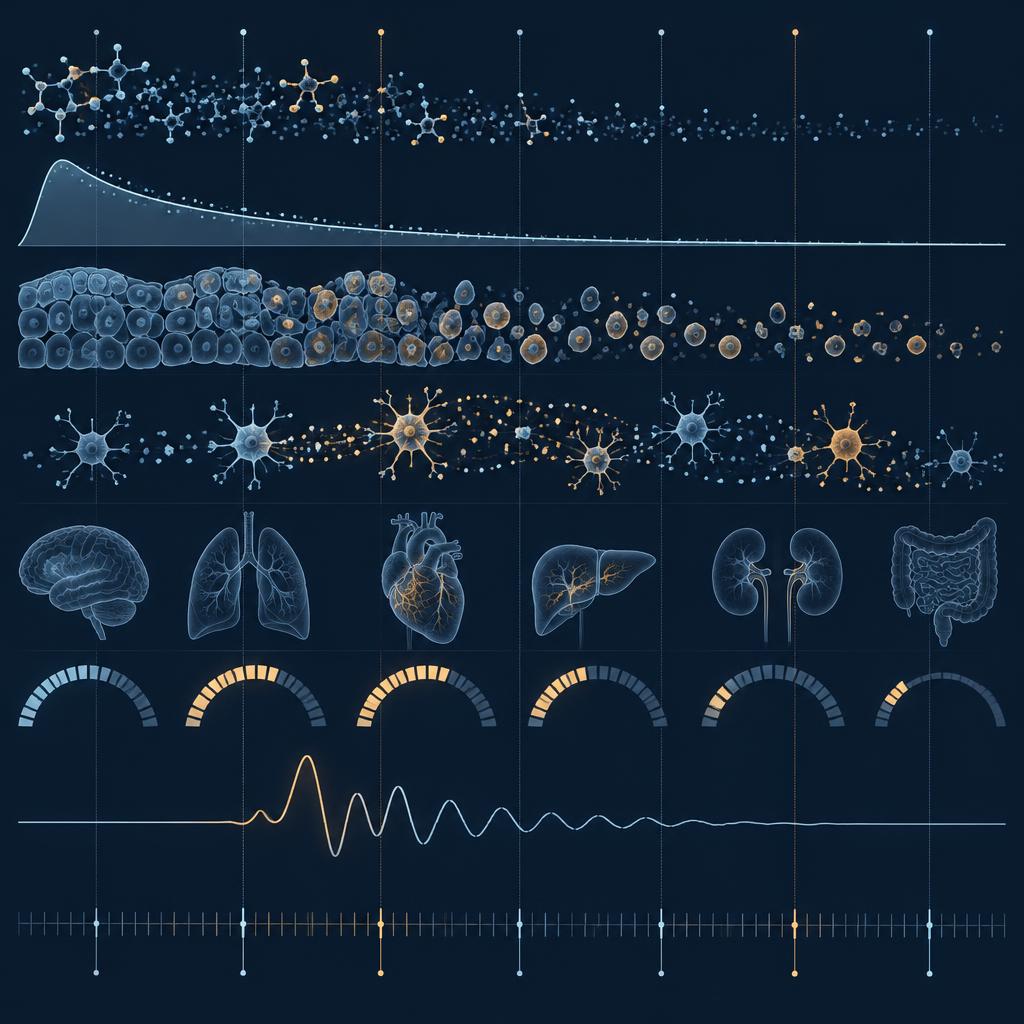
Eight asynchronous biological streams sampled together over time, from toxin identity and burden to physiologic reserve and diagnostic latency.

The platform organizes continuously evolving observations into discrete but related streams representing toxin identity, toxin kinetics, direct injury, organ-system dysfunction, host response, physiologic reserve, treatment effect and diagnostic latency.

The engine evaluates the rate and acceleration of change within each stream, the lag between toxin concentration and biological effect, evidence of hysteresis, the probability that a given process presently controls deterioration, and the expected value of acquiring each available additional measurement.

  1. 01Toxin identity
  2. 02Toxin burden
  3. 03Direct tissue injury
  4. 04Host-response amplification
  5. 05Organ-system dysfunction
  6. 06Physiologic reserve
  7. 07Treatment response
  8. 08Diagnostic turnaround time

The Therapeutic Window as a Computational Variable

A narrowing therapeutic window: candidate tests and interventions positioned by turnaround time and expected clinical value, some arriving after the window closes.

Not every available test is clinically valuable at every moment. A highly informative assay may become functionally irrelevant if its result arrives after the useful intervention window has closed.

The system therefore weighs expected diagnostic information against acquisition time, biological deterioration and estimated time to irreversible injury. Its purpose is to identify which measurement or intervention offers the greatest time-adjusted clinical value now.

Detecting Causal Migration

The initiating toxic agent and the pathology it produces may begin as coupled biological processes and subsequently diverge. Neutralization may reduce circulating toxin activity while vascular, inflammatory, muscular, neurologic or renal injury continues to progress.

The system is designed to detect this transition and redirect attention toward the biological process that has become the active driver of deterioration.

Treatment should follow the active driver of disease—not remain permanently anchored to the initiating toxin.

From Analysis to Physical Clinical Action

Monitors, laboratory analyzers, infusion and respiratory systems feeding an analytic processor, with clinician-facing and device-facing outputs.

The disclosed architecture contemplates integration with physiologic monitors, laboratory instruments, infusion systems, respiratory hardware and hospital information infrastructure. Depending upon implementation and clinical authorization, outputs may include prioritized testing, high-acuity alerts, adaptive monitoring frequency and control instructions for connected medical devices.

Proposed Validation Pathway

Planned Translational Validation

Initial validation is expected to begin with complementary animal-model kinetics. Wistar rats can support serial blood sampling, continuous physiologic telemetry and dense PK/PD reconstruction. C57BL/6 mice can provide mechanistic resolution through tissue pathology, immune signaling, transcriptomics and pathway analysis.

Experimental comparisons may include untreated progression, early versus delayed neutralization, and neutralization combined with host-directed intervention. Subsequent targeted in-vitro and ex-vivo studies may isolate specific vascular, inflammatory, muscular, neurologic and cellular mechanisms identified in vivo.

The central question is whether early multistream measurements allow the engine to identify a change in causal control before conventional static thresholds—and whether intervention directed at that transition improves survival, organ preservation or functional recovery.

Intended Translational Value

Earlier Recognition

Detect accelerating injury and causal transition before static thresholds reveal the full trajectory.

Higher-Value Testing

Prioritize measurements whose information can arrive while it remains clinically actionable.

Adaptive Intervention

Redirect treatment as causal control moves from toxin burden toward persistent host pathology.

Clinical Integration

Connect biological analytics with monitoring, laboratory and medical-device infrastructure.

Advancing Biological Intelligence Under Time Pressure

Continuum Innovative is developing the scientific, mathematical and translational foundation required to evaluate this platform through appropriate basic-science, engineering and clinical collaborations.

Contact