Continuum
Innovative
Life Sciences Division

Research Programs

A Unified Frameworkfor Follicular Biology

Seven interlocking research programs — each investigating a distinct aspect of biological stability, degeneration, and recovery, and all united by a single hypothesis-driven framework that uses the hair follicle as a uniquely accessible regenerative organ system.

Program 01

Hair Systems Biology

The follicle as a polygenic micro-organ
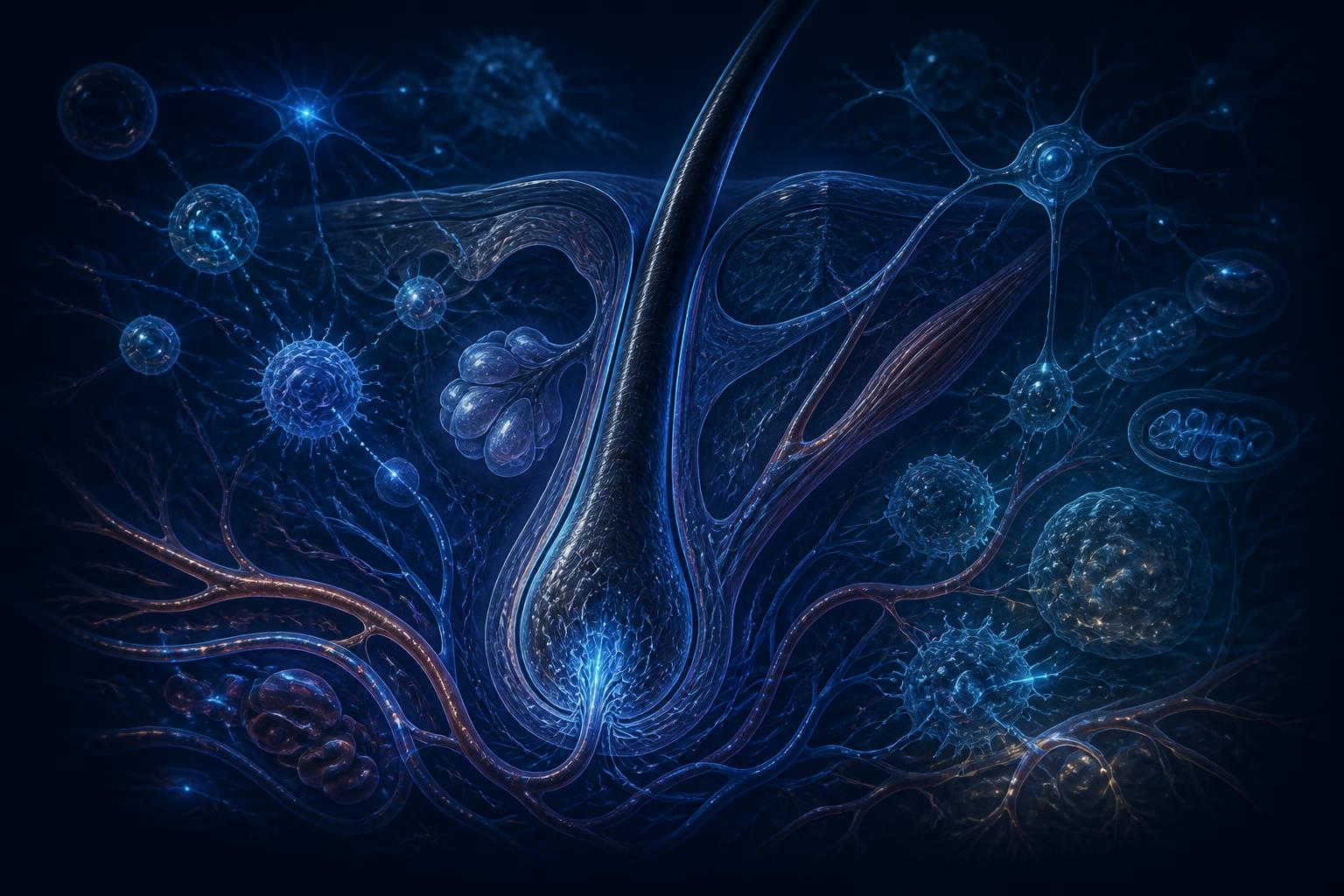
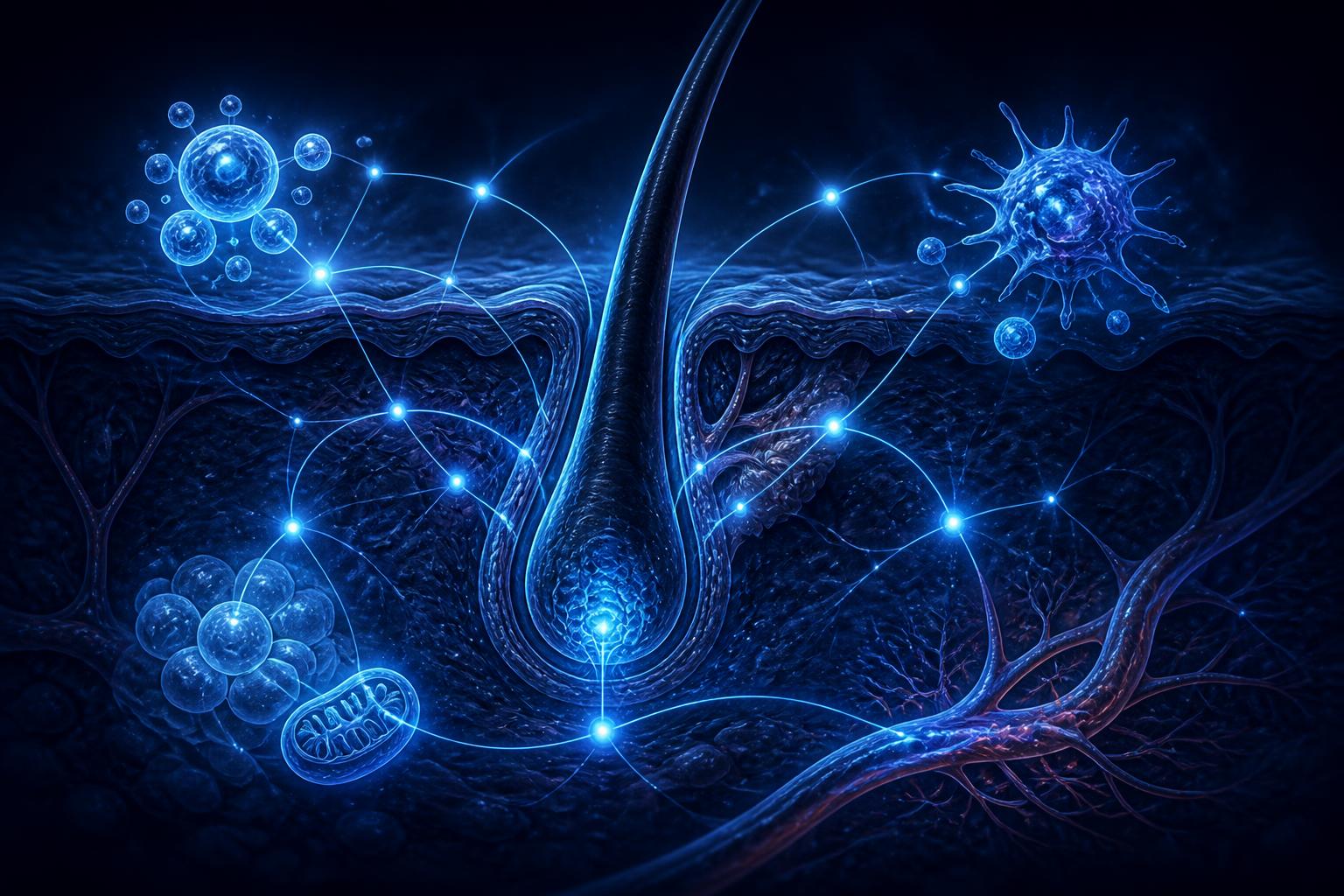
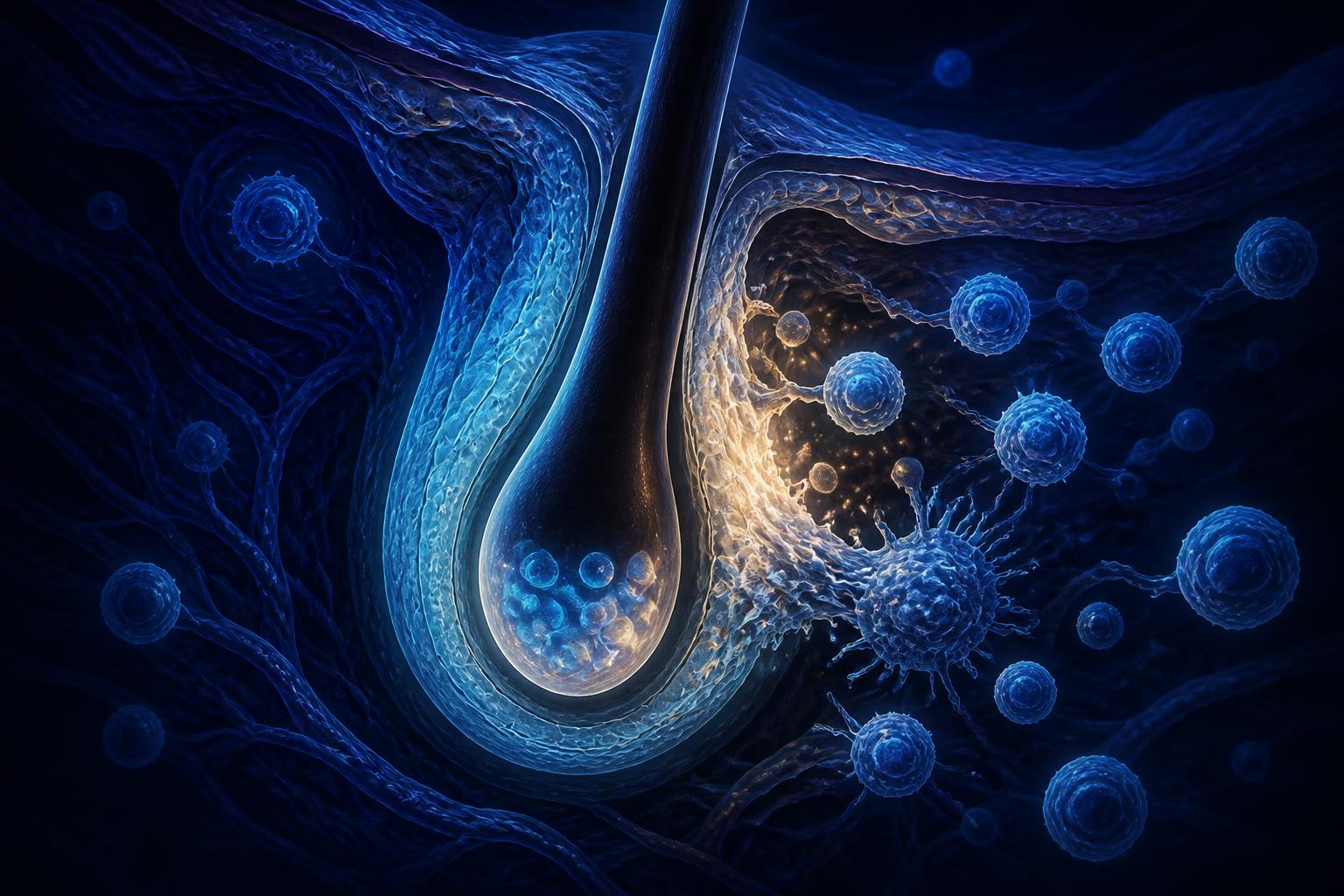
Dark navy scientific illustration of a hair follicle depicted as a polygenic micro-organ with converging endocrine, immune, vascular, and metabolic networks.
The follicle as a networked micro-organ — endocrine, immune, vascular, and metabolic nodes converging on a single unit.

The hair follicle is not only a hair-producing appendage. It is also a small, self-regulated organ system whose behavior is shaped by the simultaneous activity of endocrine signaling, intracrine metabolism, immune surveillance, and vascular perfusion. We treat it as a polygenic micro-organ — an integrated system whose stability, phenotype, and disease trajectory can only be understood by studying those interacting nodes together, not one at a time.

This program provides the anatomical and systems-biology foundation on which every other Continuum research program rests. It defines the object of study, establishes the vocabulary of structure–function integrity used throughout our work, and grounds the platform's core hypothesis: that follicular disease reflects coordinated destabilization of an entire micro-organ, not the failure of a single receptor or enzyme.
Program 02

Biological Sovereignty

Immune privilege and its progressive erosion

Dark navy scientific illustration of a hair follicle immune sanctuary being infiltrated at its periphery by luminous immune cells.
A protected sanctuary under breach — the moment immune privilege begins to erode.

A small number of tissues in the human body are granted immune privilege — the immune system is instructed to leave them alone. The hair follicle is one of them. We investigate how that privileged status is maintained, how it is progressively eroded, and how erosion allows the immune system to begin recognizing the follicle as foreign.

This program frames a category of follicular disease that has historically been treated as purely hormonal but is, in significant part, immunologic. The work examines the molecular signatures of an intact sanctuary, the earliest signs of destabilization, and the biological levers that may restore privilege where it has been lost — with implications reaching beyond the follicle into the broader field of tissue-specific immune tolerance.

Program 03

Intracrine Regulation

The follicle's own internal hormone machinery

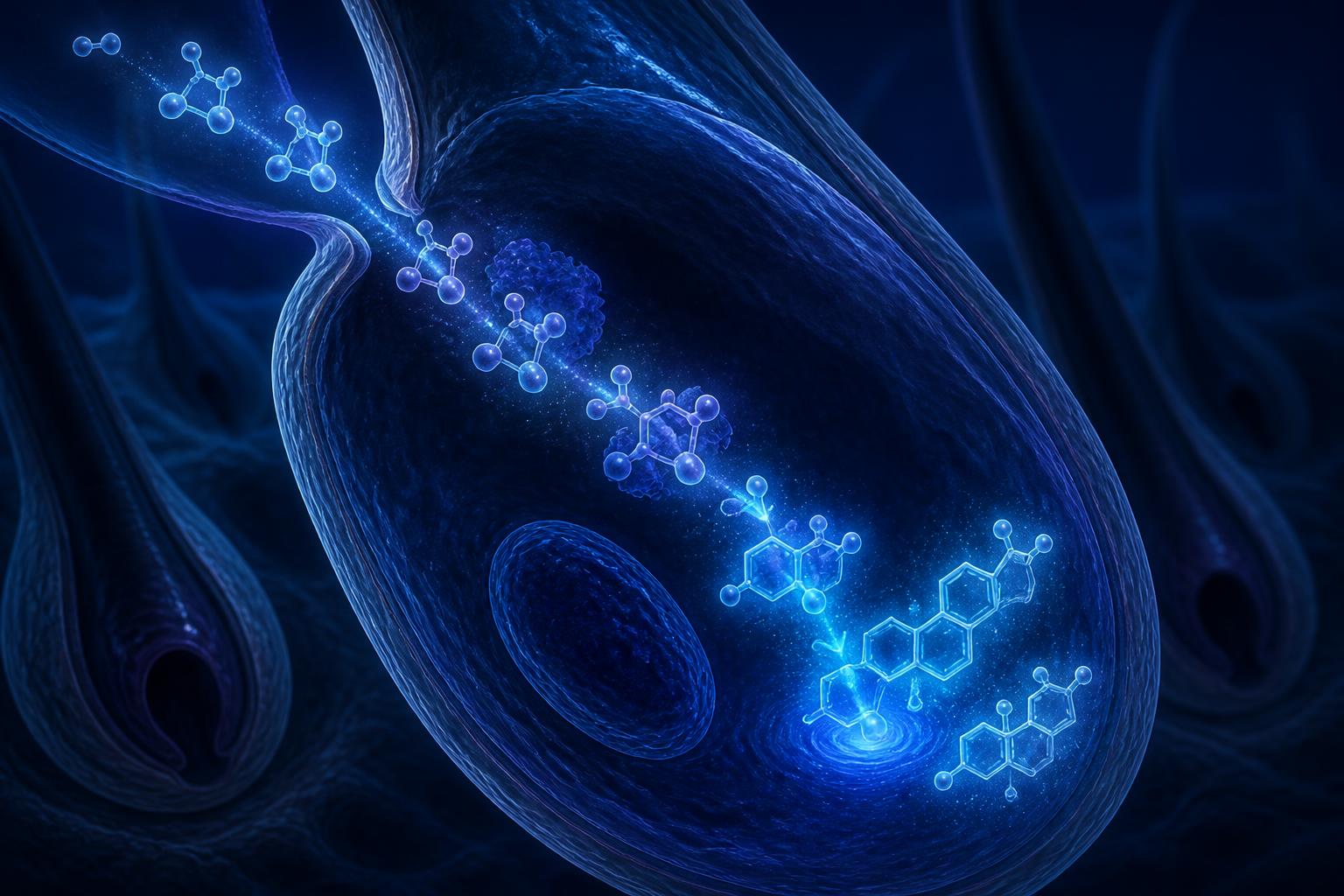
Dark navy scientific illustration of intracrine hormone regulation inside a follicular cell, with precursor molecules being converted into bioactive androgens.
Local conversion of circulating precursors into bioactive androgens inside the follicular micro-organ.

Circulating hormones are only part of the picture. Each follicle contains an internal enzymatic apparatus that takes in precursor molecules and locally converts them into the bioactive androgens that ultimately govern the follicle's phenotype, growth cycle, and vulnerability to disease. We investigate how that internal machinery is regulated — how it interprets circulating signals, how it adapts to metabolic and inflammatory context, and how it becomes a decisive determinant of therapeutic response.

Studying intracrine biology directly, rather than inferring it from systemic hormone measurements, reframes what a hair follicle actually is: not a passive target of the bloodstream, but an autonomous local endocrine environment. That reframing has practical consequences for how targeted interventions are designed and for how mechanistically clean they can be made.

Program 04

Systems Stability

Coordinated resilience across multiple biological nodes

Dark navy scientific illustration of coordinated multi-nodal stabilization of a hair follicle, with glowing interconnected signaling points forming a stable network.
Multiple signaling nodes stabilized in concert — the architecture of durable follicular resilience.

Biological systems that depend on a single input tend to fail when that input drifts. Follicular biology is no exception. This program examines how coordinated interactions among endocrine, immunologic, metabolic, regenerative, and environmental networks contribute to long-term resilience — and how targeting several of those nodes simultaneously produces stability that no single-node intervention can achieve.

The work provides a framework for understanding why so many conventional single-target therapies plateau after an initial response, and it establishes the biological rationale for coordinated multi-nodal intervention. It also has broader relevance: the same principle — that stability is a property of networks, not of individual receptors — reappears across virtually every complex tissue in the body.

Program 05

Senescence Biology

How aging cells lose regenerative capacity

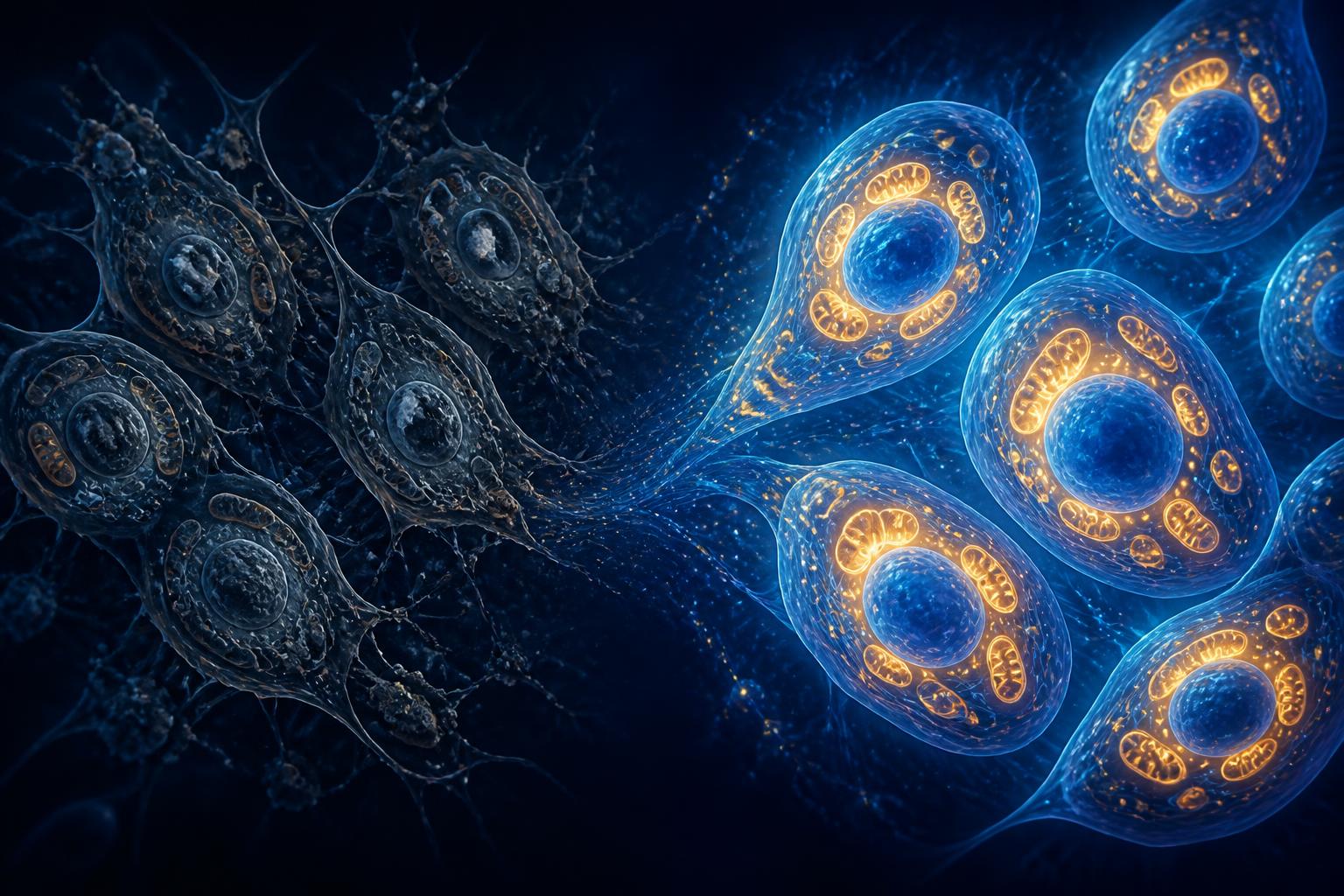
Dark navy scientific illustration contrasting senescent, dimmed cells with vibrant regenerated cells whose mitochondria glow with restored function.
Cellular senescence on the left; restored regenerative competence on the right.

Long before hair visibly thins, cells inside the follicle quietly slip into senescence — a worn-out state in which they persist without contributing to renewal. We investigate the molecular signatures of that transition, the point at which enough cells enter it to compromise the organ, and the biological interventions that may preserve or restore regenerative competence.

This program addresses a category of biological failure that hormone- and immune-focused approaches cannot reach: the follicle has not been attacked, it has simply grown tired. Understanding that mode of failure is essential to serving mid-life and older patients — and it connects directly to the broader field of healthy-aging biology, where the same senescence signatures appear across many regenerative tissues.

Program 06

Regenerative Systems

The follicle as a lens on regenerative biology

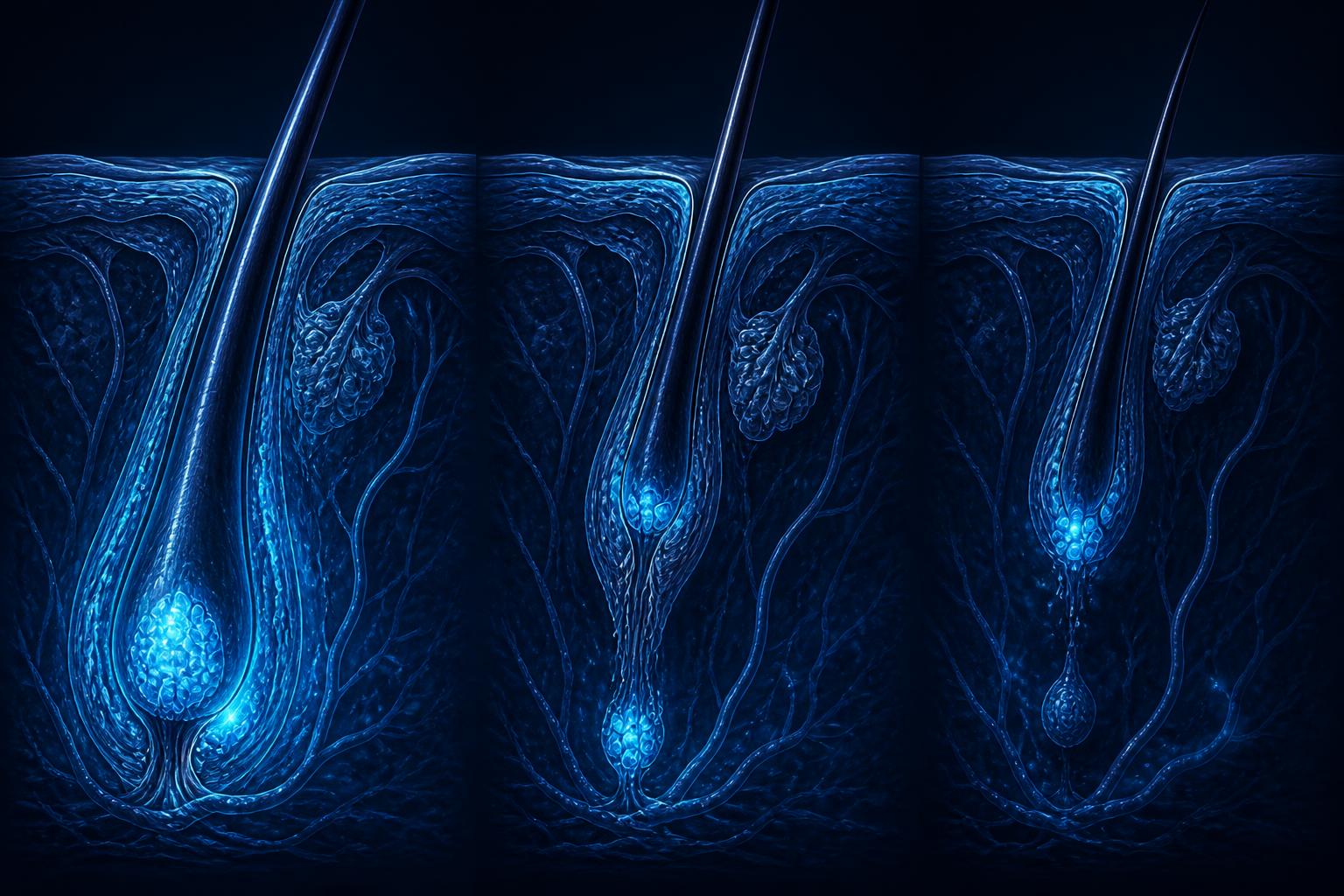
Dark navy scientific illustration of the hair follicle cycling through anagen, catagen, and telogen phases, with luminous stem cell niches at each phase.
Anagen · Catagen · Telogen — stem-cell-driven phase transitions of a regenerative organ.

The hair follicle is one of the very few organ systems in the human body that fully regenerates on a biological cycle. That property makes it a rare and uniquely accessible laboratory for studying regenerative biology at large — stem-cell dynamics, cellular plasticity, phase transitions between growth and rest, and the restoration of function after loss.

Insights generated in this program travel outward. The mechanisms governing recovery in the follicle inform how we think about regeneration and repair across degenerative and age-associated disorders more broadly. It is the program in which our follicular work most explicitly becomes a window onto human regenerative biology.

Program 07

Menopause & Follicular Resilience

A distinct endocrine transition, biologically speaking

Dark navy scientific illustration of menopausal follicular destabilization, showing descending estrogen molecules and a follicle whose supporting hormonal environment is shifting.
The estrogen environment collapsing around a follicle whose stability depends on it.

Menopause is not simply the female counterpart of androgenetic alopecia. It is a distinct endocrine transition in which declining estrogen fundamentally reshapes the biological environment that supports follicular stability. This research explores how that transition alters follicular function and identifies therapeutic strategies specifically matched to its underlying biology.

By studying menopausal hair loss as a distinct biological process — rather than as a variation of male-pattern hair loss — we hope to advance a more appropriate scientific framework for understanding and treating this common but historically underrecognized condition. This work also extends our broader research into endocrine aging, regenerative biology, and women's health.

A Unified Research Framework

Together, these programs use the hair follicle as a uniquely accessible regenerative organ system through which broader principles of tissue resilience, aging, adaptation, endocrine regulation, and regenerative biology may be explored.

Contact