Continuum
Innovative
Life Sciences Division

Provisional Deep-Dive

Intracrine Structure–Function Dynamics

Managing the follicle's own internal hormone factory
Abstract microscopy image of intracellular hormone conversion inside a hair follicle
USPTO Provisional 64/063,263

Each follicle runs its own hormone factory. This filing regulates it — without shutting down androgens body-wide.

Back to Intellectual Property

In brief

Most hair-loss products act on hormones circulating in the bloodstream. In reality, each follicle runs its own small hormone factory inside itself — taking in precursor molecules and locally converting them into the aggressive androgens that drive miniaturization. Blocking the bloodstream signal misses this local machinery entirely. This filing covers the compositions and delivery methods that regulate that internal follicular hormone factory directly, at the site where the damage actually occurs.

For an international commercialization partner, this is what allows the product line to be positioned as a next-generation alternative to finasteride and dutasteride — same fundamental target category (androgen-driven hair loss), but a more sophisticated mechanism and a much cleaner safety story, because it is not shutting down androgen conversion throughout the entire body. That is a meaningful conversation to have with dermatologists, pharmacists, and end consumers who are wary of systemic hormone drugs.

Endocrine, paracrine, intracrine

Three ways a hormone can reach its target. Only the third one is invisible to systemic drugs.
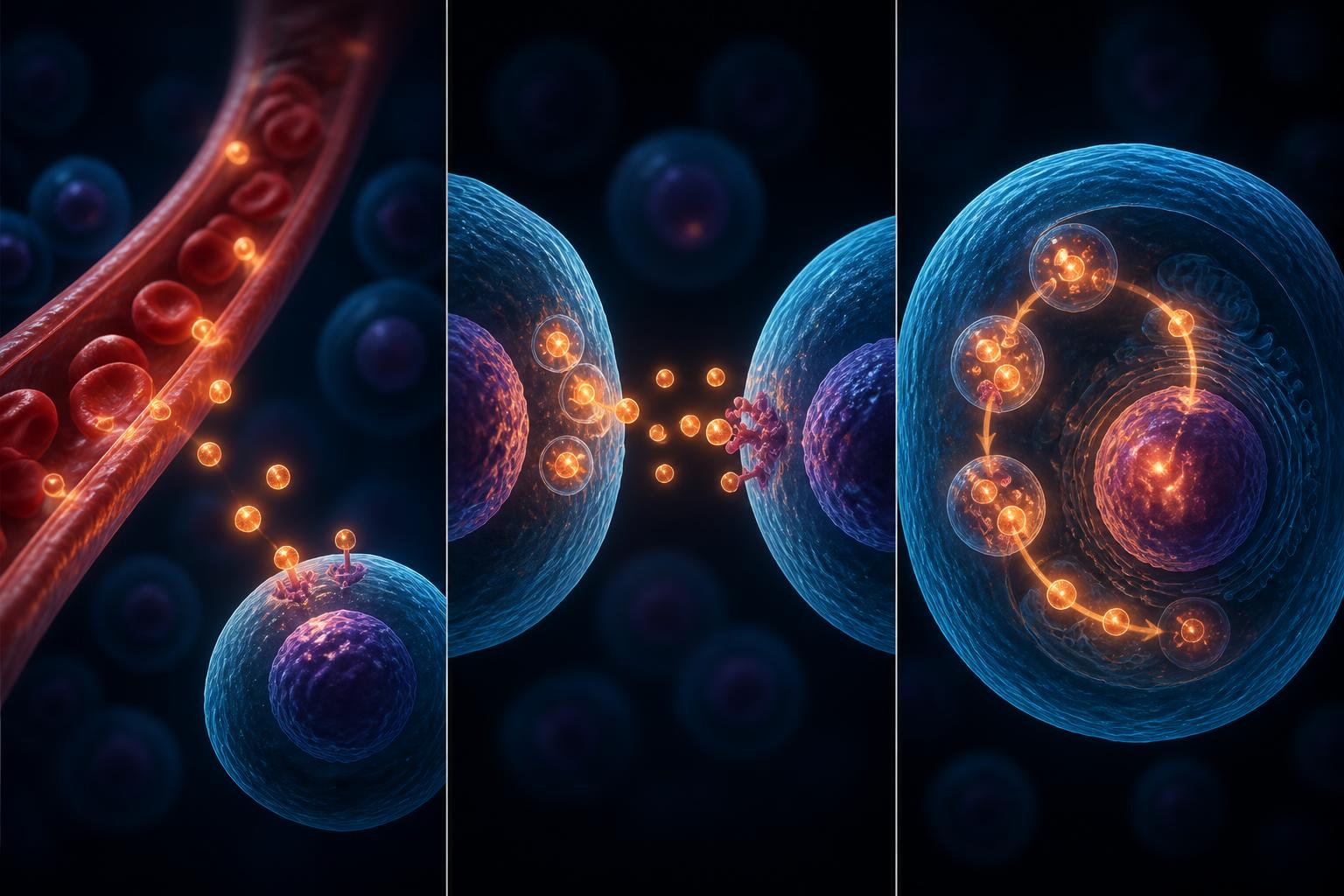
Illustration comparing endocrine, paracrine, and intracrine hormone signaling modes
Endocrine
Distant gland → bloodstream
Paracrine
Cell → neighbor
Intracrine
Inside one cell

Three signaling modes, shown left to right: distant gland-to-blood, neighbor-to-neighbor, and entirely within a single cell.

1

Endocrine

A gland releases a hormone into the bloodstream. Distant tissues receive the same signal.

This is the model behind finasteride and dutasteride: lower systemic DHT and hope the follicle receives less.

2

Paracrine

A cell releases a hormone that acts only on its immediate neighbors.

Local, but still outside-in: the signal moves between cells in the same tissue.

3

Intracrine

A cell imports a precursor and produces the active hormone inside itself, for its own use.

This is the follicle’s own hormone factory — and the mechanism this filing targets.

The hair follicle is a textbook intracrine tissue. It imports weak precursor androgens and, using its own local enzymes, converts them into the potent forms that trigger miniaturization. That conversion happens inside the follicle, for the follicle, and the bloodstream never sees it. This is why systemic androgen blockade only partly works: the follicle keeps producing its own active hormones from precursors the systemic drug never touches.

Why systemic androgen blockade only partly works

Illustration of a follicle producing its own androgens internally, bypassing systemic hormone blockade
The follicle keeps producing its own active hormones from precursors the systemic drug never touches.

This is the mechanistic reason so many patients on finasteride plateau or relapse over time. The drug lowers systemic DHT dramatically, but the follicle can keep making its own from precursors the drug does not touch. The intracrine machinery routes around the blockade.

It is also the reason systemic androgen suppression carries the safety trade-offs it does. Because the drug acts everywhere, patients contend with well-documented sexual, metabolic, and mood effects that are simply not acceptable to a growing share of the market — particularly younger patients, patients considering fertility, and any woman who cannot take it at all.

What this provisional protects

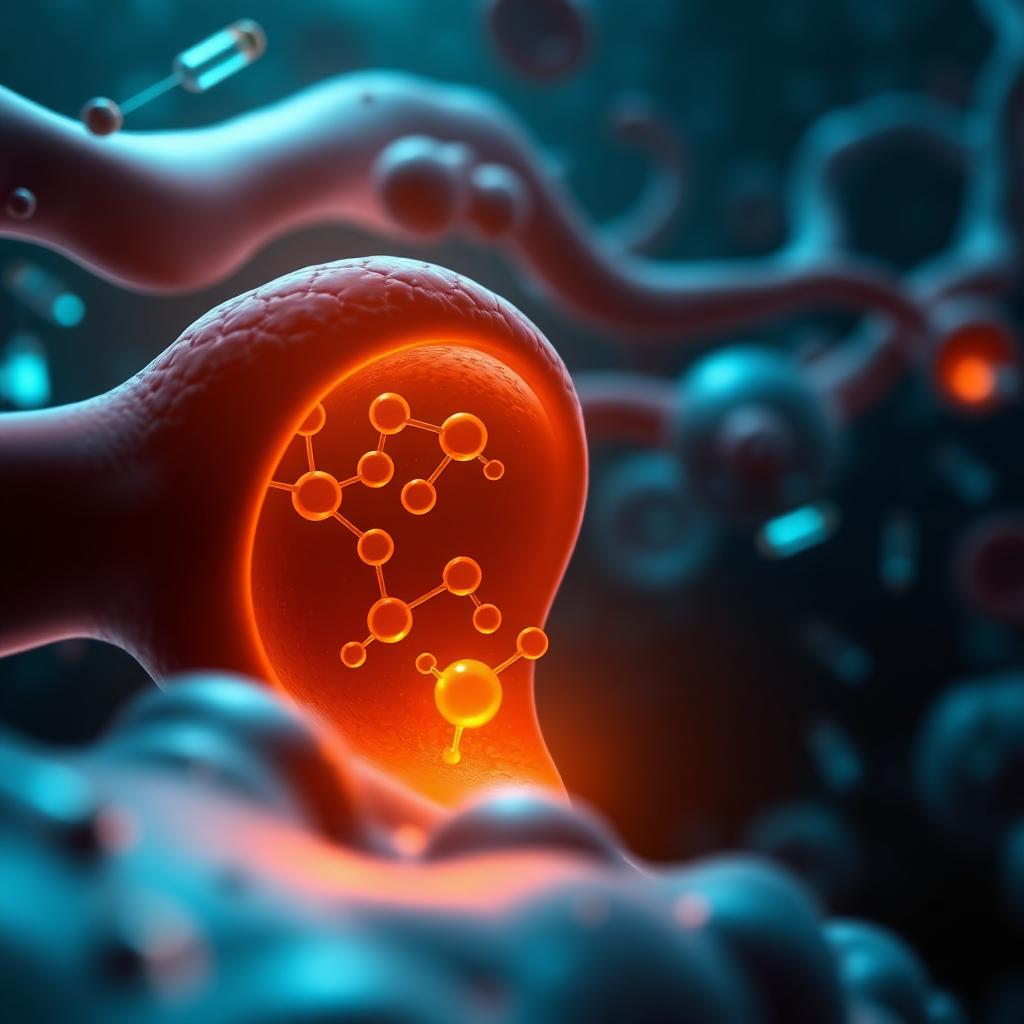
Illustration of therapeutic molecules modulating local enzymes inside a follicular cell
Local modulation at the site of the damage — without depending on body-wide hormone blockade.

The filing covers compositions and delivery methods that modulate androgen conversion inside the follicle — down-regulating the local enzymes and the local structure-function machinery that drive miniaturization — without depending on systemic hormone blockade. The intervention is local, targeted at the site where the damage occurs, and does not require the patient to lower their body-wide androgen levels to see follicular benefit.

The same filing covers pleiotropic signaling elements — the collateral pathways the follicle uses to translate hormone exposure into structural change — which means the composition addresses the downstream signals as well as the enzyme itself.

Why it matters commercially

This is the technical basis for positioning the product line as a next-generation alternative to oral 5-alpha reductase inhibitors. The category conversation with a dermatologist, a pharmacist, or an informed end consumer is: same target biology, better mechanism, dramatically cleaner safety profile. That is a story that resonates in a market where finasteride discontinuation for side-effect reasons is a well-known phenomenon.

  • Intracrine regulation
  • Local androgen metabolism
  • Pleiotropic signaling
Contact