
The hair follicle within its surrounding tissue field
USPTO Provisional 64/136,221

SPATIALLY ORGANIZED TISSUE-FIELD REGULATION OF ANDROGENETIC ALOPECIA SUSCEPTIBILITY, PHENOTYPE EXPRESSION, AND PROGRESSION

Back to Intellectual Property

Filing details

USPTO filed title
SPATIALLY ORGANIZED TISSUE-FIELD REGULATION OF ANDROGENETIC ALOPECIA SUSCEPTIBILITY, PHENOTYPE EXPRESSION, AND PROGRESSION
Provisional application
64/136,221
Filed
August 18, 2026

A spatially organized tissue field
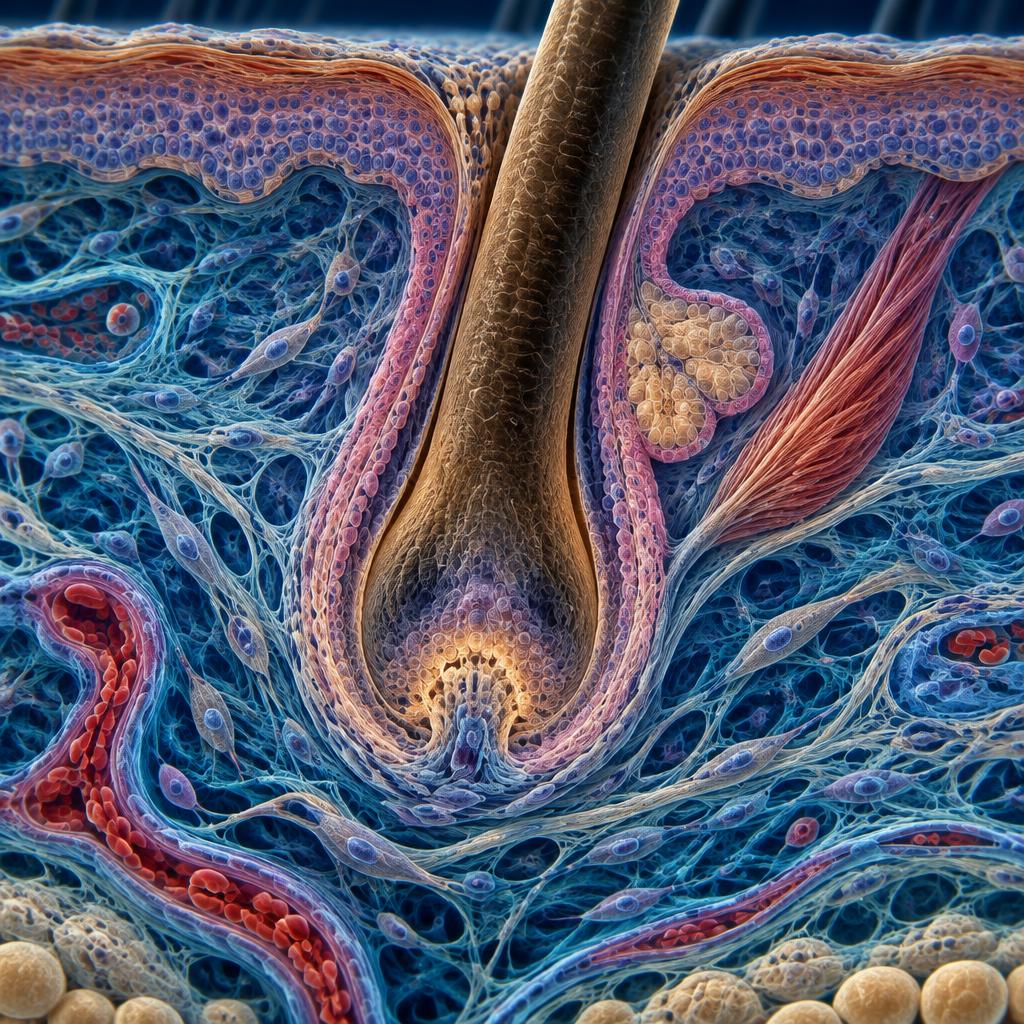
The follicle within its surrounding stromal and extracellular-matrix microenvironment.

Androgenetic alopecia is conventionally understood primarily through the biology of individual susceptible follicles. This invention expands that framework by proposing that phenotype expression may also be influenced by a spatially organized tissue field surrounding and interconnecting follicular units.

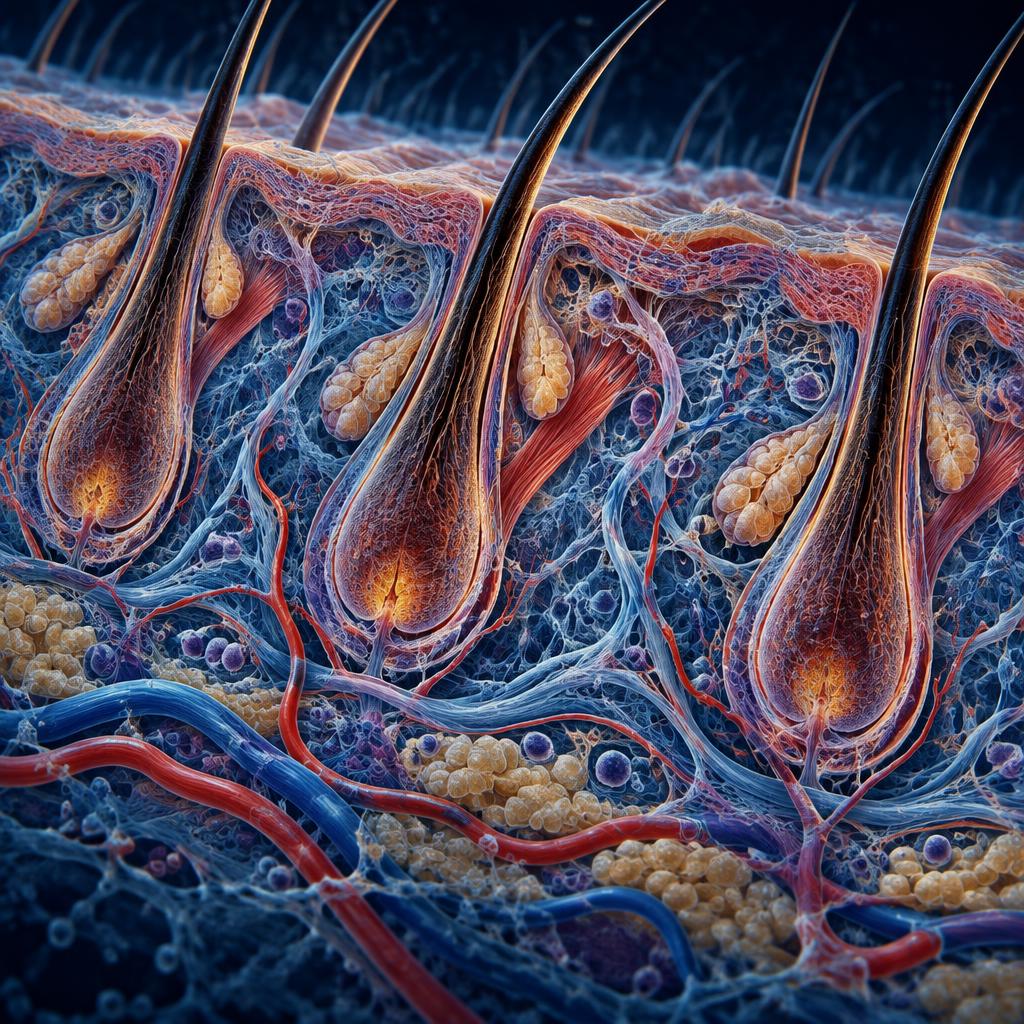
The components of the field

Reciprocal communication between the follicle and its surrounding tissue field.

The field may incorporate stromal and extracellular-matrix architecture together with vascular, immune, inflammatory, senescent, metabolic, neural, paracrine, and biomechanical components. Rather than treating these elements merely as consequences of follicular miniaturization, the invention considers whether their collective regional state can influence when, where, and how genetically susceptible follicles express the AGA phenotype.

Reciprocal follicle–field communication

Regional organization across interconnected follicular units.

The resulting model permits reciprocal communication. Phenotype-altered follicles may modify their surrounding tissue environment, while changes within that environment may in turn influence the originating follicle and neighboring susceptible follicles. Repeated interactions can therefore establish a self-reinforcing follicle-to-field and field-to-follicle system capable of contributing to regional organization, persistence, and progression of disease.

What this provisional protects

The intellectual-property framework encompasses methods for detecting and characterizing these spatial tissue states; identifying molecular, cellular, structural, and biomechanical signatures associated with them; stratifying disease; screening interventions; and therapeutically modifying field-to-follicle or follicle-to-field signaling. The concept complements rather than replaces follicle-intrinsic mechanisms and provides an additional level of biological organization through which patterned hair loss can be investigated and potentially treated.

  • Stromal microenvironment
  • Extracellular matrix
  • Reciprocal signaling
  • Tissue-field regulation
Contact